Japanese book nooks are the most atmospheric corner of the hobby: a narrow street of wooden shopfronts, paper lanterns and hand-lettered signs, lit warm from inside and tucked between your books. Ramen counters, izakaya, a corner konbini, a kimono shop – each is a small, complete scene.
See every kit: all book nook kits.
This guide compares twelve Japanese-themed kits listed on My Cutebee – nine street-scene book nooks, two small desk builds and one larger house – on build time, lighting and size, and suggests which to start with.
The 12 Japanese kits at a glance
| Kit | Best for | Published build time | Lights included | Finished size (as listed) |
|---|---|---|---|---|
| Cutebee Morita-Ya Ramen Shop DIY Book Nook Kit | Overall | about 5 hours | Check listing | 5 × 2 × 10 in |
| Cutebee Izakaya DIY Book Nook Kit | After-dark scene | about 5 hours | Check listing | 5 × 2 × 10 in |
| Cutebee Beika-cho Convenience Store DIY Book Nook Kit | Modern street | about 5 hours | Check listing | 5 × 2 × 10 in |
| Cutebee Sakura Kimono Shop DIY Book Nook Kit | Traditional shop | about 5 hours | Check listing | 5 × 2 × 10 in |
| Cutebee Wagashi Sweet Shop DIY Book Nook Kit | Sweet shop | about 5 hours | Check listing | 5 × 2 × 10 in |
| Cutebee Kyoto Antique Bookshop DIY Book Nook Kit | For book lovers | about 4 hours | Yes | — |
| Cutebee Twilight Sakura Path DIY Book Nook Kit | Cherry-blossom scene | about 6 hours | Check listing | 5 × 2 × 10 in |
| Cutebee Kyoto Snow Whisper DIY Book Nook Kit with LED | Winter scene | about 5 hours | Yes | 5 × 2 × 10 in |
| Cutebee Japanese Tea House DIY Book Nook Kit with LED | Tea house | about 4 hours | Yes | 5.8 × 5.6 × 7.6 in |
| Cutebee Kyoto Matcha Cottage DIY Miniature House Kit | One-evening build | about 2 hours | Check listing | 3.9 × 3.4 × 4.1 in |
| Cutebee Osaka Takoyaki 3D Wooden Puzzle | Smallest build | about 2 hours | Check listing | 1.6 × 1.2 × 2 in |
| Rolife Sakura Tree House DIY Miniature House Kit | Larger build | about 5 hours | Check listing | 12 × 9 × 11 in |
Build times are the makers’ own figures; first builds usually take longer. Sizes are as listed.
What makes the Japanese kits different
Three things. First, signage: printed paper signs, noren curtains and menu boards carry much of the character, so they reward a steady hand with glue. Second, small props – bowls, bottles, lanterns, bicycles – which take more of the build time than the walls do. Third, light: these scenes are designed to be seen glowing on a dim shelf, so a kit with lighting included, or a pack of micro LEDs, makes the biggest difference.
Build a whole Japanese street
Most of the street-scene kits below are listed at the same footprint – about 5 × 2 inches and 10 inches tall – so two or three stand side by side as one continuous street. A ramen counter, a konbini and an izakaya together read as a single block after dark. Measure the shelf gap first with our shelf-size guide.
Best Japanese book nook street scenes
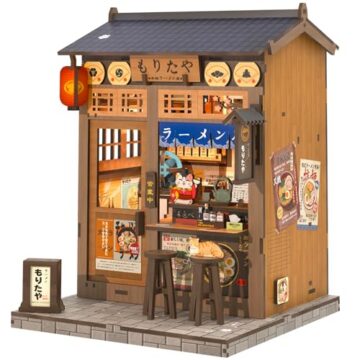
Best overall: Cutebee Morita-Ya Ramen Shop DIY Book Nook Kit
A Japanese street scene in miniature: A back-street ramen shop — counter seating, steam-curtained entrance and signage down a narrow alley. See the kit →Check Price →
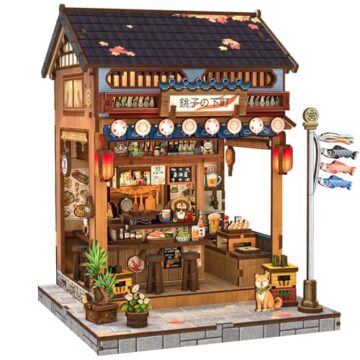
Best after-dark scene: Cutebee Izakaya DIY Book Nook Kit
A Japanese street scene in miniature: A Japanese izakaya — lantern-lit entrance, hanging noren curtain and a bar interior packed with small props. See the kit →Check Price →
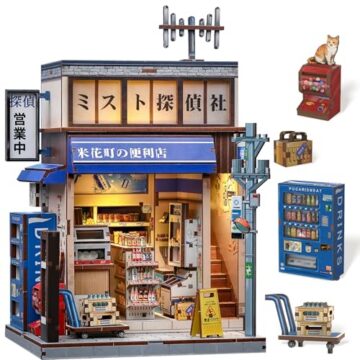
Best modern street: Cutebee Beika-cho Convenience Store DIY Book Nook Kit
A Japanese street scene in miniature: A Japanese konbini — stocked shelves, a lit shopfront and the everyday clutter of a neighbourhood convenience store. See the kit →Check Price →
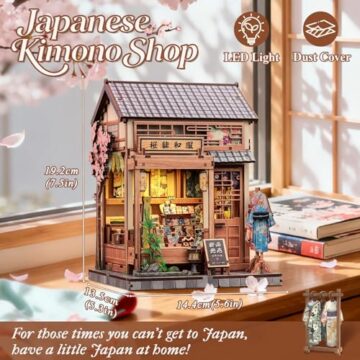
Best traditional shop: Cutebee Sakura Kimono Shop DIY Book Nook Kit
A Japanese street scene in miniature: A traditional kimono shop under cherry blossom — folded fabrics, shop signage and sakura branches framing the storefront. See the kit →Check Price →
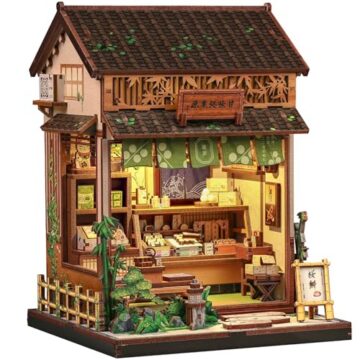
Best sweet shop: Cutebee Wagashi Sweet Shop DIY Book Nook Kit
A Japanese street scene in miniature: A Japanese wagashi confectionery — trays of tiny traditional sweets, a display counter and warm shop lighting. See the kit →Check Price →
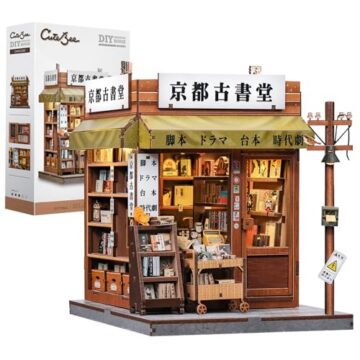
Best for book lovers: Cutebee Kyoto Antique Bookshop DIY Book Nook Kit
A Japanese street scene in miniature: An antique bookshop in Kyoto — crowded shelves, stacked volumes and a warm reading-room feel. See the kit →Check Price →
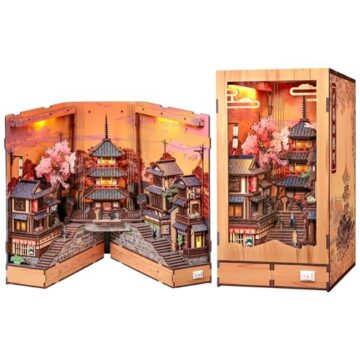
Best cherry-blossom scene: Cutebee Twilight Sakura Path DIY Book Nook Kit
A Japanese street scene in miniature: A cherry-blossom street at dusk — a lantern-lit path running between shopfronts under falling sakura. See the kit →Check Price →
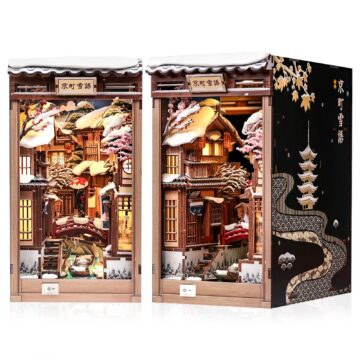
Best winter scene: Cutebee Kyoto Snow Whisper DIY Book Nook Kit with LED
A snowy Japanese night scene with snow-covered cottages, a red bridge and kimono-clad figures under warm built-in LED lights.Brand: CutebeePublished build time: about 5 hoursFinished size: 5 x 2 x 10 inLighting:… See the kit →Check Price →
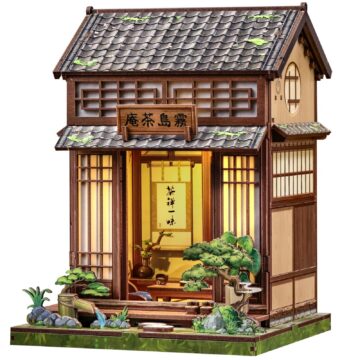
Best tea house: Cutebee Japanese Tea House DIY Book Nook Kit with LED
A minimalist Japanese tea house around a green courtyard and white gravel, lit by integrated warm LEDs, with a published build time of 3-5 hours.Brand: CutebeePublished build time: 3-5 hoursFinished size: 14.7… See the kit →Check Price →
Small Japanese desk builds
Palm-sized kits finished in an evening – good for a first build or a quick gift.
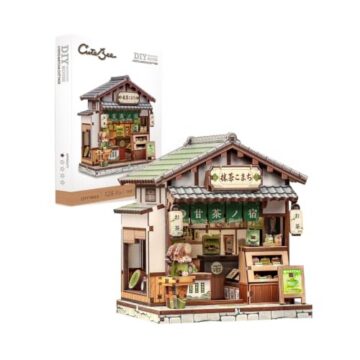
Best one-evening build: Cutebee Kyoto Matcha Cottage DIY Miniature House Kit
A Kyoto matcha tea house: A green-fronted tea shop with signage, awnings and a counter of miniature matcha service. See the kit →Check Price →
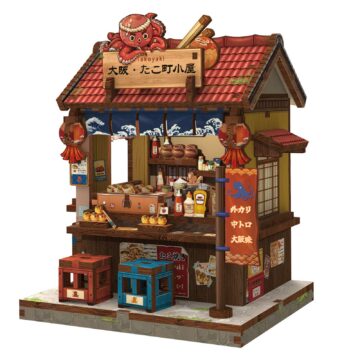
Smallest build: Cutebee Osaka Takoyaki 3D Wooden Puzzle
A palm-sized Osaka takoyaki stall in 146 wooden pieces, built in a published 1-2 hours with no wiring or batteries.Brand: CutebeePublished build time: 1-2 hoursPieces: 146Finished size: 4 x 3 x 5… See the kit →Check Price →
A larger Japanese build
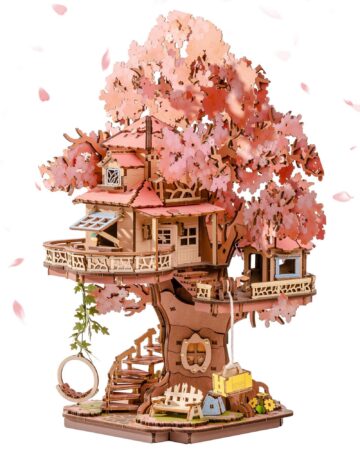
Best larger build: Rolife Sakura Tree House DIY Miniature House Kit
A 535-piece glue-free wooden tree house from Rolife, built around cherry blossom branches, a swing, a spiral stair and a lift basket in about 5 hours.Brand: RolifePublished build time: 5 hoursPieces: 535Finished… See the kit →Check Price →
Building tips for the Japanese kits
- Fit the paper signs and curtains last, after the glue on the wooden frame is dry, so they stay flat.
- Sort the tiny props into a tray before you start – most of the time goes on them.
- Test the light before closing the roof; battery boxes are easier to reach before the last panels go on.
- Use a fine-nozzle glue – see the glue guide.
Japanese book nook FAQ
Which Japanese book nook should I build first?
A street shop with a published time of around four to five hours – the ramen shop or konbini – or one of the small desk builds if you want a single evening.
Do Japanese book nook kits include lights?
Several do; the table shows which listings state lighting is included. Batteries are usually not in the box.
Will they fit a normal bookshelf?
The street scenes are narrow inserts about 10 inches tall, which fits most shelves; check each product page for exact size.
Are there other Asian-themed kits?
Yes – courtyard and garden-house builds; see garden & greenhouse kits.
Keep exploring
Best book nook kits → · Library & bookshop nooks → · Magic & fantasy nooks → · How to build a book nook →
My Cutebee is an independent comparison site. We organise kits by theme and the factual details published in their listings; inclusion is not a hands-on test. Seller, price, delivery and return terms are shown on Amazon.
Browse our hand-picked book nooks
Every kit is shortlisted for build quality and shelf appeal. You check out on Amazon, where the current seller, delivery estimate and return terms are shown before you buy.