Miniature scale tells you how a model’s measurements relate to the full-size object. In 1:12 scale, one unit in the model represents twelve of the same units in real life; a one-inch miniature feature represents one foot. In 1:24 scale, one inch represents two feet. The larger the second number, the smaller the miniature.
That sounds simple until product listings use phrases such as “dollhouse scale,” “mini room,” or “approximately 1:24” without giving exact dimensions. Book nooks also often prioritise fitting a bookshelf opening over following a traditional dolls’ house scale. Use scale as a compatibility clue, then verify actual measurements.
Scale comparison at a glance
| Scale | Also called | Approximate model height for a 6 ft person | Typical use |
|---|---|---|---|
| 1:6 | Fashion-doll scale | 12 in / 30.5 cm | Large figures, furniture and room displays |
| 1:12 | One-inch scale | 6 in / 15.2 cm | Traditional dollhouses and detailed furniture |
| 1:24 | Half-inch scale | 3 in / 7.6 cm | Compact houses, room boxes and many DIY kits |
| 1:48 | Quarter-inch scale | 1.5 in / 3.8 cm | Very compact houses and architectural scenes |
| 1:144 | Dollhouse-for-a-dollhouse scale | 0.5 in / 1.27 cm | Tiny nested miniatures and specialist models |
These human-height figures are mathematical reference points, not a promise that every commercial kit uses precisely proportioned people or rooms.
What 1:12 scale means
At 1:12, dividing the real measurement by twelve gives the model measurement. A 36-inch-high table becomes 3 inches high. This scale offers enough physical space for working drawers, upholstered furniture and fine accessories, which is why it is common in traditional dollhouses.
The trade-off is footprint. A multi-room 1:12 house can be a substantial display object. Before buying one, measure the table, cabinet or shelf where it will live and include room to open the front or roof if the design requires access.
What 1:24 scale means
At 1:24, the same 36-inch table becomes 1.5 inches high. A 1:24 scene uses roughly half the linear dimensions of its 1:12 equivalent, so it can fit much more comfortably on a shelf. The parts are also smaller and may demand finer tweezers, steadier alignment and more careful cable routing.
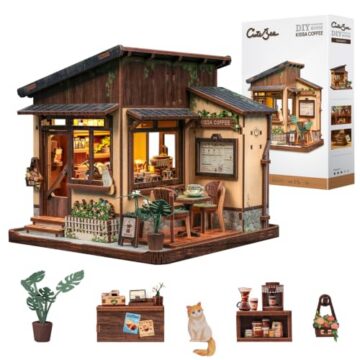
Many compact DIY house kits are described as 1:24 or near that size. “Near” matters: manufacturers sometimes change proportions for visual effect or assembly. Check the finished dimensions and the dimensions of any accessory you plan to add.
Are book nooks made to dollhouse scale?
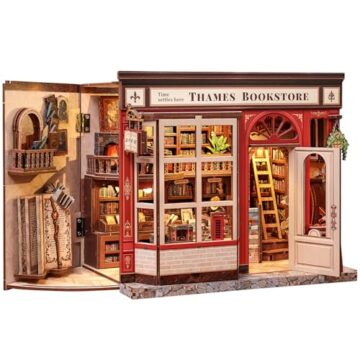
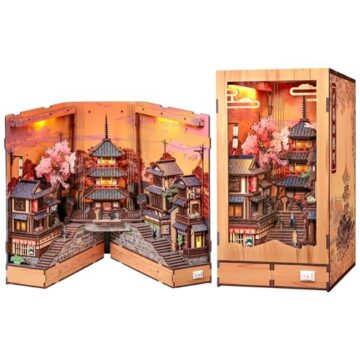
Not always. A book nook is primarily a narrow diorama designed to sit between books. Its visual perspective may taper toward the back, and doors, furniture or figures can be resized to make the scene read clearly through the opening. Treat “book nook scale” as kit-specific unless the maker gives a ratio.
For display planning, the critical measurements are finished width, height and depth. For replacement furniture or figures, measure a reference object in the assembled scene rather than relying only on the category name. Explore book nook kits and compare the dimensions shown on the source listing before ordering.
How to calculate a miniature measurement
Use this formula:
Model measurement = real-world measurement ÷ scale denominator.
For a 72-inch door:
- At 1:12: 72 ÷ 12 = 6 inches.
- At 1:24: 72 ÷ 24 = 3 inches.
- At 1:48: 72 ÷ 48 = 1.5 inches.
Keep units consistent. If the original is in centimetres, the result is in centimetres.
How to identify an unknown scale
- Choose a feature with a predictable real-world size, such as a door, chair seat or adult figure.
- Measure the miniature in millimetres or inches.
- Estimate the full-size equivalent in the same unit.
- Divide the full-size measurement by the model measurement.
- Compare the result with common ratios, but allow for stylisation.
One object can mislead you. Confirm with two or three reference features before buying a large accessory set.
Mixing scales: when it works
Adjacent scales can work when the object has no universally obvious size. Plants, books, baskets, food, lamps and wall art vary greatly in real life. A smaller item can also be placed farther back to strengthen forced perspective. Doors, staircases, beds and human figures expose scale mismatches more quickly.
If you are building a cohesive room, start with the largest fixed object and choose accessories around it. If you are upgrading a kit, photograph a ruler beside the opening or furniture bay so you can compare listing dimensions while shopping.
Scale and lighting
Large bulbs can make a small scene look toy-like. For 1:24 and smaller builds, fine wire and compact LEDs are easier to hide. The voltage, resistor and battery requirements are electrical questions rather than scale questions, so follow the supplied circuit design. See our miniature lighting guide before changing a kit’s LEDs.
Scale and display cases
A scale ratio does not tell you the exterior dimensions. Roofs, bases, façades and wiring compartments add space. Use the maker’s finished size and allow clearance on every side for assembly, switches and airflow. Our display guide includes a measurement checklist, and the display cases and stands collection can help you compare formats.
Buying checklist
- Finished width, height and depth
- Stated scale, if any
- Interior opening or room dimensions
- Accessory dimensions—not just the seller’s scale label
- Display and access clearance
- Figure height and furniture reference points
- Whether the kit uses forced perspective
Browse our hand-picked kits
Every kit is shortlisted for build quality and shelf appeal. You check out on Amazon, where the current seller, delivery estimate and return terms are shown before you buy.