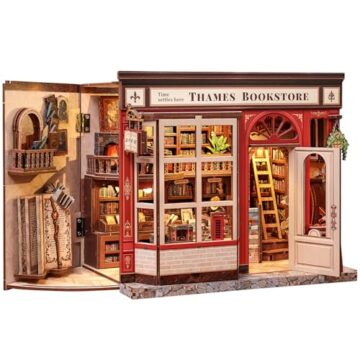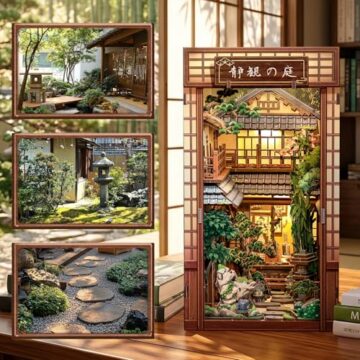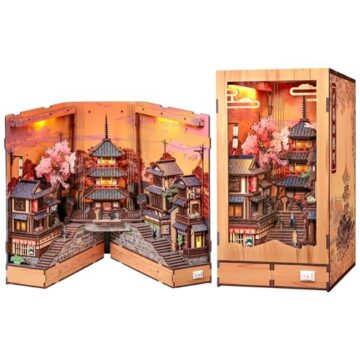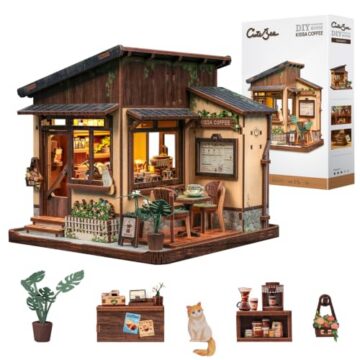
New to the hobby and stuck choosing? The three big kit families each scratch a slightly different itch. Here is how we would steer you.
Book nooks
Best if you want a quick, high-impact result that lives on a bookshelf. Most are a few evenings of work and the lit scene looks fantastic. Start here if you are buying your first kit or a gift.
Miniature houses & dollhouses
Best if you love detail and want a complete building to furnish room by room. Longer builds, more accessories, more to display from every angle.
3D wooden puzzles
Best if you enjoy mechanisms and problem-solving as much as decorating. Many have moving parts, so the build itself is the entertainment.
What to look for
- Time you want to spend — a weekend, or a long-term project?
- Whether you want a static scene or something with moving parts.
- Where it will live — a shelf gap, a desk, or a display cabinet.
Popular starting points
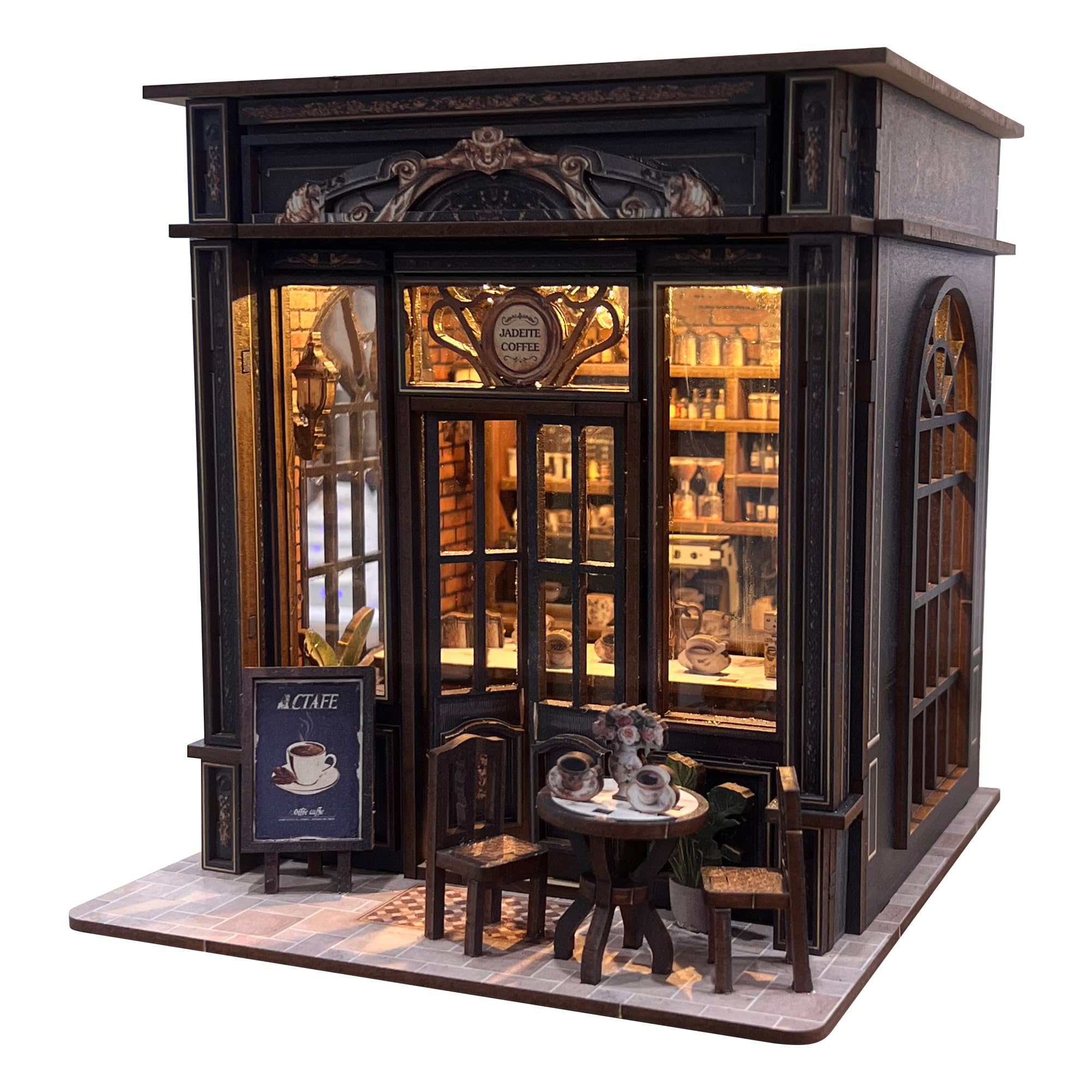
Coffee Shop DIY Book Nook Kit with LED
Review the current materials, contents and finished dimensions before choosing. See the kit →
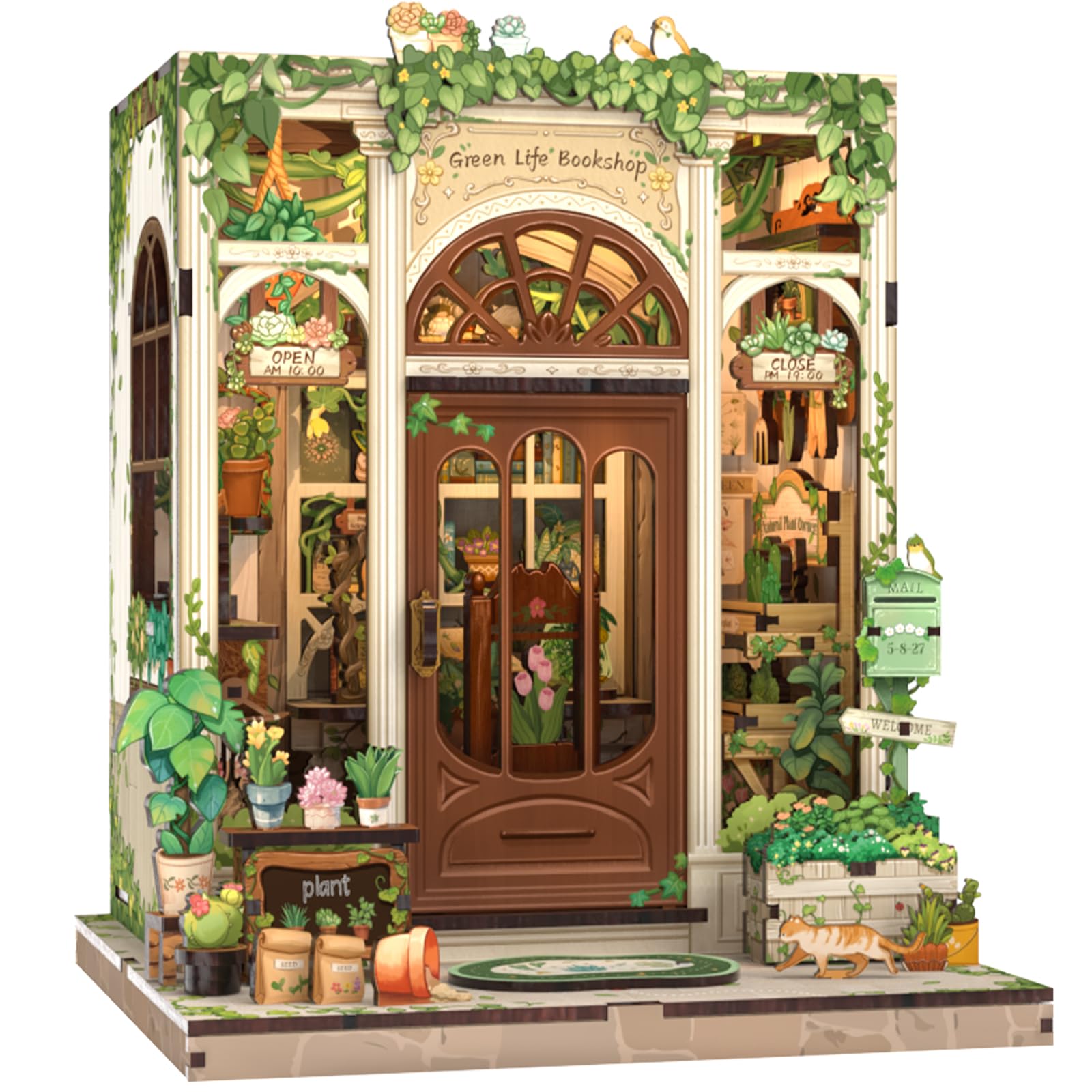
Cutebee Green Life Bookshop DIY Book Nook Kit
Compare the published assembly details and required supplies with the builder’s experience. See the kit →
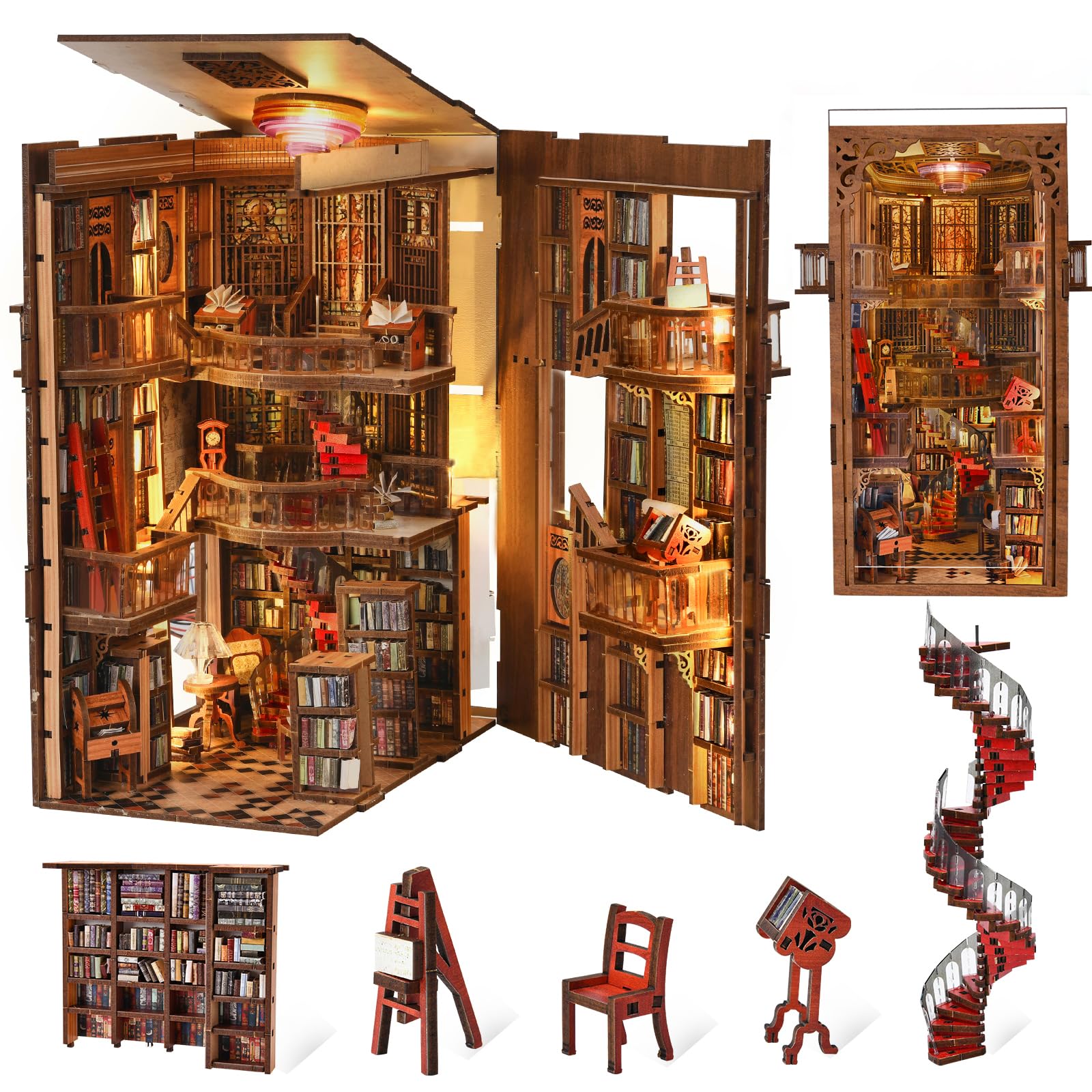
MiniCity Abbey Library DIY Book Nook Kit with LED
Check the finished dimensions, stability and display requirements before ordering. See the kit →
Quick comparison
| Format | Build experience | Display footprint | Good match for |
|---|---|---|---|
| Book nook | Layered diorama, paper details, structure and often LEDs | Narrow but usually deep | Readers, story scenes and bookshelf display |
| Miniature house | Rooms, furniture, décor, paint and sometimes wiring | Medium to large | Interior design, customisation and collecting |
| 3D wooden puzzle | Press-fit engineering; static or mechanical | Varies by model | Builders who prefer structure and mechanisms |
Choose a book nook if…
You want a complete visual story in a narrow bookshelf format. Book nooks combine several craft types: structural panels, printed surfaces, miniature props and lighting. They are often more decorative than mechanical. The main buying checks are finished shelf dimensions, instruction quality, included LEDs and how many tiny paper details the scene requires.
They work especially well for a person who already has a book collection and wants a scene that integrates with it. Browse book nook kits.
Choose a miniature house if…
You enjoy arranging furniture, choosing colour schemes and seeing a room from a wider angle. Houses offer more access for customisation, but they generally need more display space and collect more dust. Traditional shell kits can become long projects; compact pre-coloured rooms are more approachable. Browse miniature house kits.
Choose a wooden puzzle if…
You prefer the logic of tabs, slots, gears and mechanisms to paper flowers or fabric upholstery. Many wooden puzzles build without conventional glue, though the specific manual decides. Moving models demand accurate alignment because a beautiful assembly may still fail to move if a gear is tight. Browse 3D wooden puzzles.
Compare the hidden commitments
Workspace
A book nook or house may need trays for wet painted and glued subassemblies. A mechanical puzzle needs a flat surface where delicate gears remain aligned. Check whether the workspace can stay undisturbed between sessions.
Tools and consumables
Miniature scenes often use glue, tweezers, a cutting mat and possibly paint. Wooden puzzles may use sanding or wax specified by the maker. Include these extras in the real cost.
Maintenance
Open rooms and plant-filled scenes catch more dust than smooth mechanical models. Moving puzzles may require careful storage so gears or handles are not stressed.
Time
Piece count does not translate directly into hours across formats. A tiny paper book and a large press-fit wall each count as one piece but demand different effort.
Decision path for a first kit
- Measure the available display space.
- Choose between decorative storytelling and mechanical movement.
- Decide how much painting, paper craft and wiring you want.
- Check the current included-parts list and required supplies.
- Select a theme you will still enjoy after the build is finished.
If you are still unsure, a well-documented small book nook or static wooden puzzle offers a contained first project. A large unfinished dollhouse is better treated as an ongoing hobby rather than a single weekend build.
Can you combine the formats?
Yes. Wooden mechanisms can become features inside miniature scenes, and dollhouse accessories can personalise a book nook when their size works. Scale is the limiting factor. Compare actual measurements rather than relying on category names, and keep added weight or paint away from moving parts.
Keep exploring
My Cutebee may earn an Amazon commission from links on this page, at no cost to you.
Browse our hand-picked kits
Every kit is shortlisted for build quality and shelf appeal. You check out on Amazon, where the current seller, delivery estimate and return terms are shown before you buy.